

Write
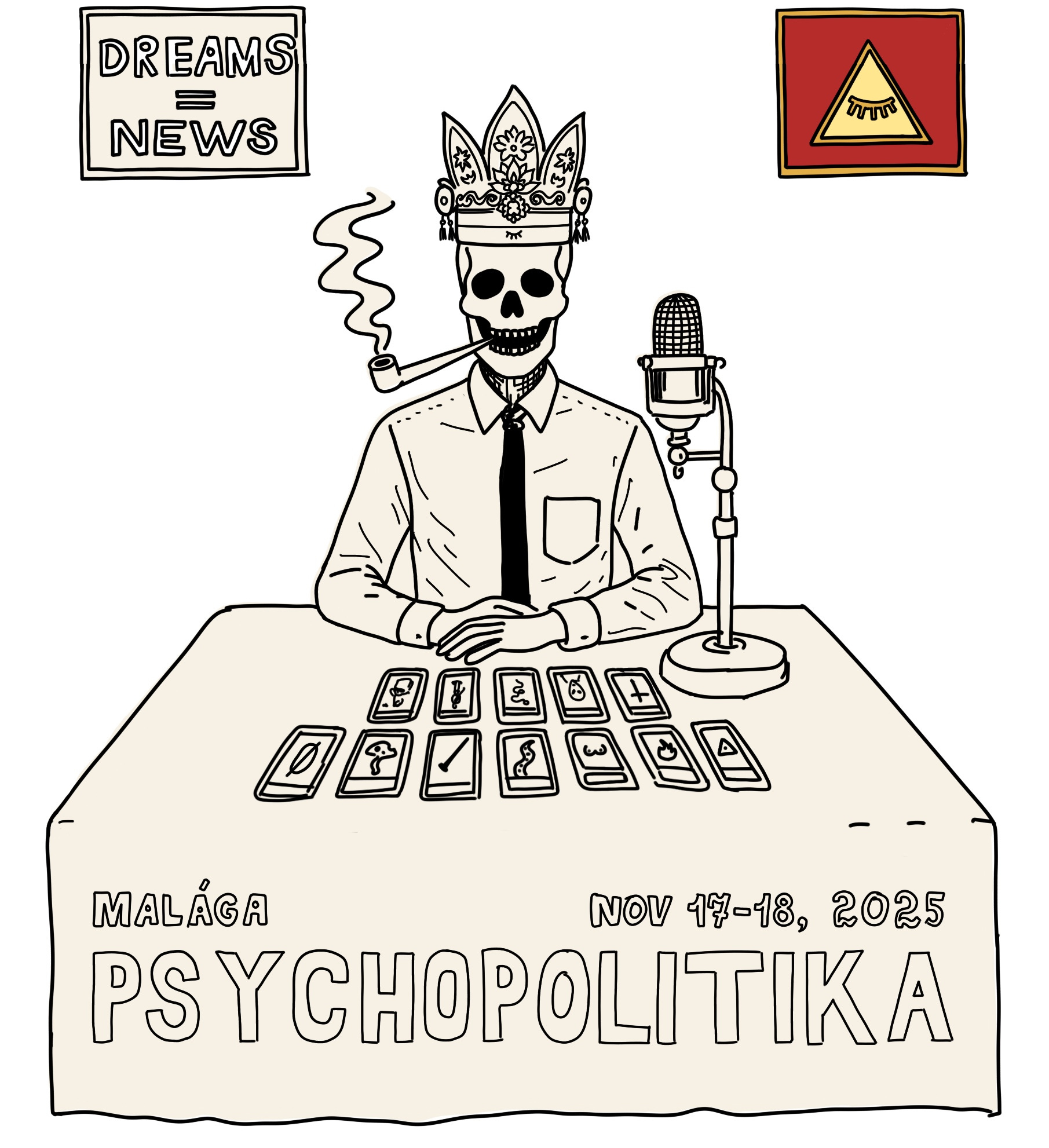
KOSMOPOLITIKA BROADCAST TOMORROW (NOV 18)

My name is Nikita Petrov. I write, draw, and talk.
Every couple of weeks I record a new episode with Robert Wright for his Nonzero podcast. Here is the latest.
On alternating weeks, I go on air with Boris Shoshitaishvili here at PsyPol. Next one: TOMORROW, November 18, at 9:45 am PT / 12:45 pm ET / 6:45 pm CET. We’ll stream it on Substack, but if you want to send us a message or to call in (in the second part of the show), meet us at Streamyard.
Most Fridays, I produce (and make an occasional cameo on) Glenn Loury’s live streams. The next one, a conversation between Glenn and John McWhorter, will break with the schedule and happen on MONDAY, November 24, at 1pm Eastern.
You can schedule a one-on-one conversation with me, either private or public, via this link.
Today’s post is about writing.
I recently found a new tool: The Most Dangerous Writing App, a text editor that deletes your unfinished writing if you pause for more than a couple of seconds. Before all is lost, the text gets blurry and red, as if you’re a character in a simulation, about to die. The goal is to survive for a certain number of minutes or until you hit a chosen word count.
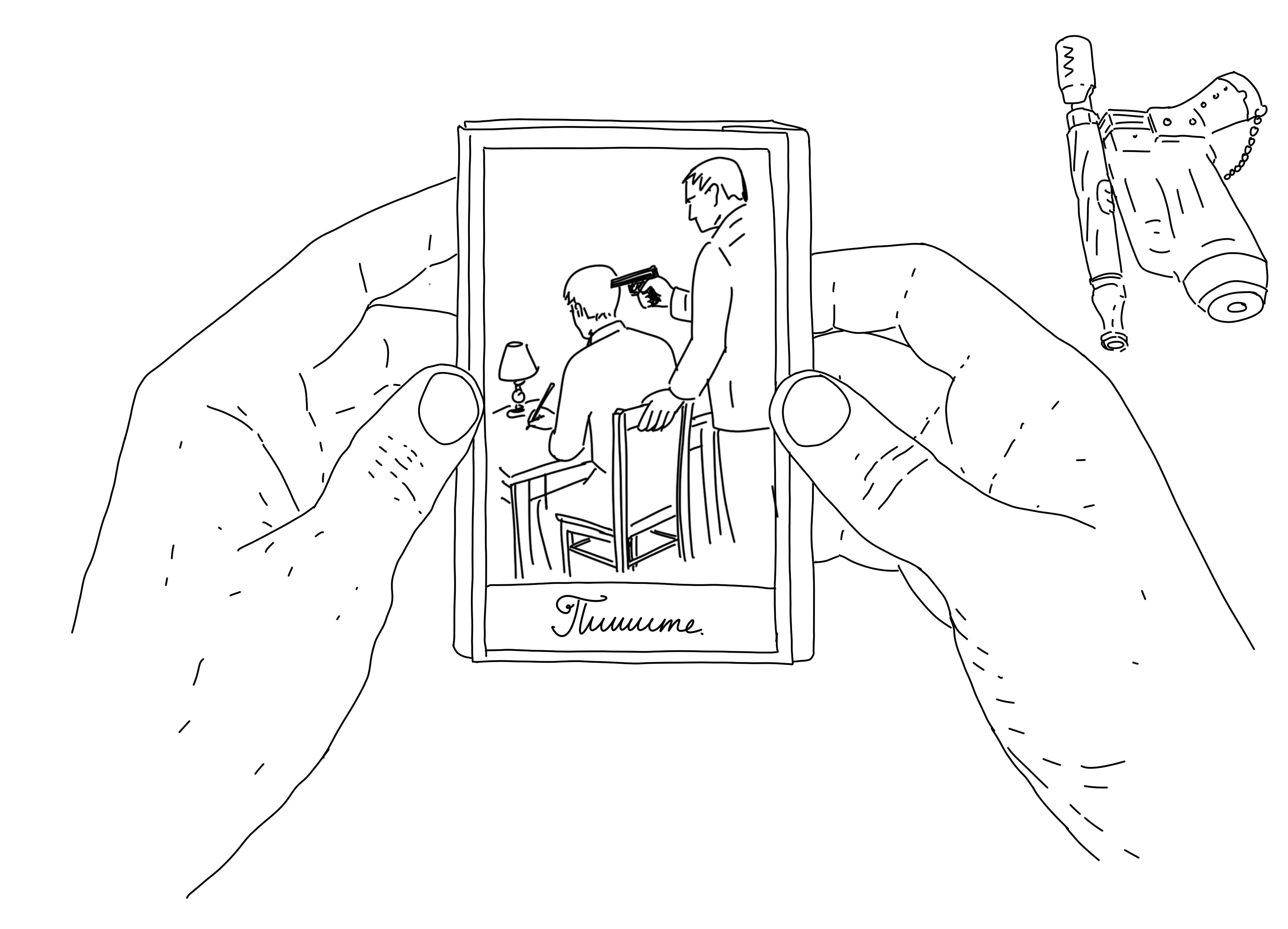
I’m finding it very useful. Of all the things that I do, or rather attempt to, writing suffers the most from procrastination and indecision, and this — I imagine a blank-faced operative tapping the back of my head with the barrel of a Makarov pistol, telling me calmly, “пишите1” — this could be a way out.
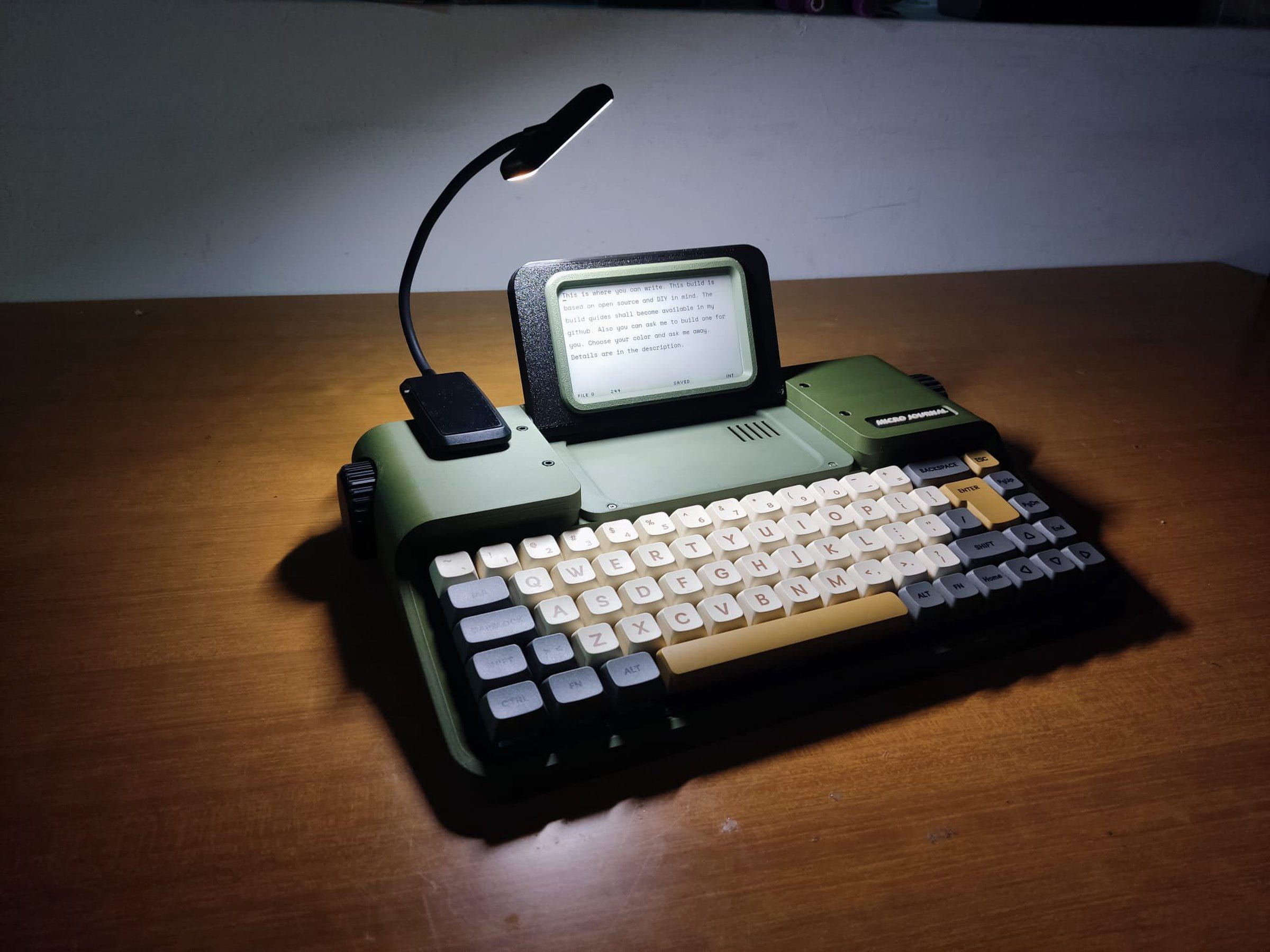
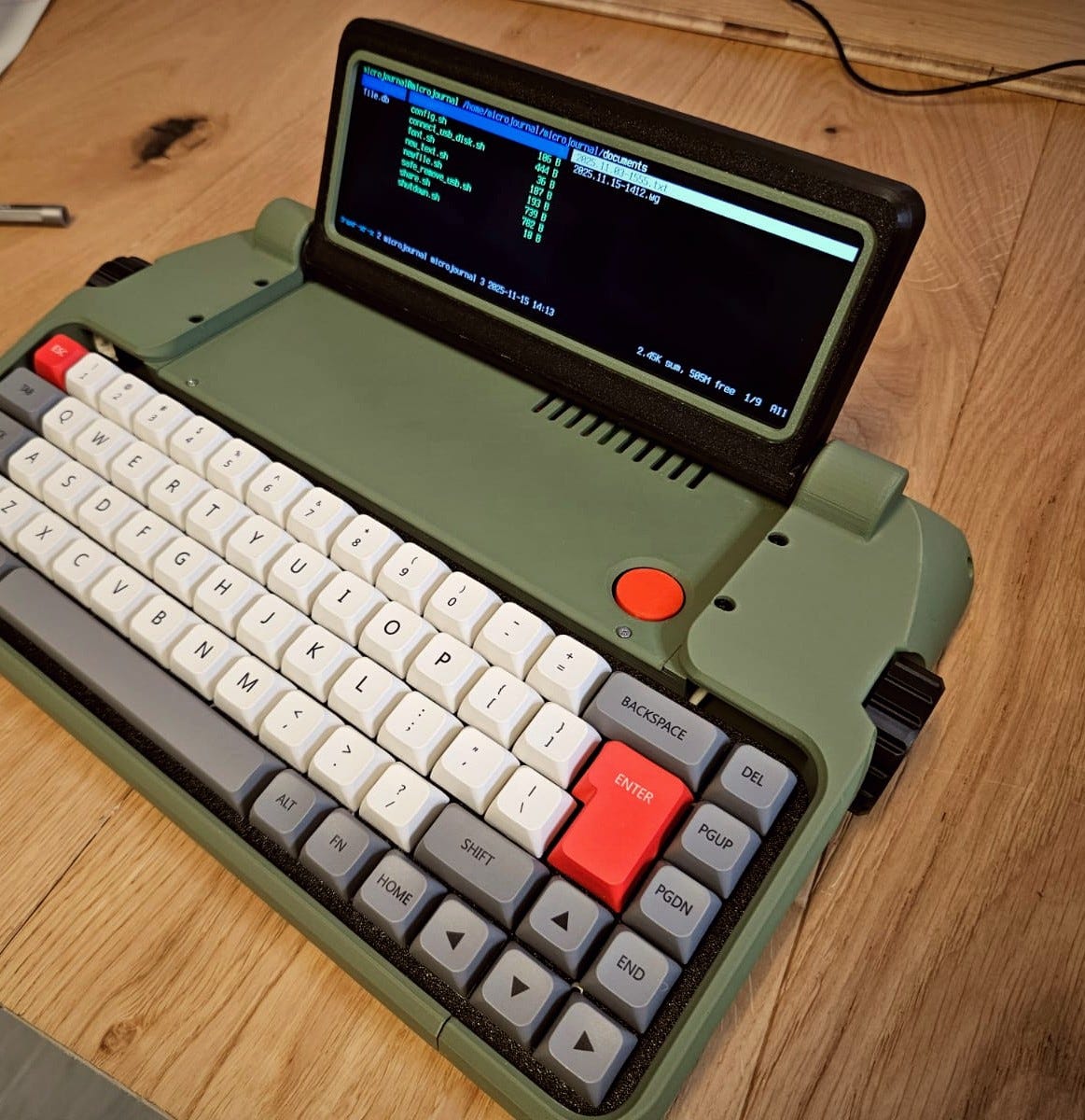
What would have been even better if this was a physical tool: like these DYI, open source, digital typewriters that a man named Un Kyu Lee — I assume Korean, but living in Italy — designs, 3D-prints and programs from scratch, one model after another, somehow while also having a job and a family.
When I first started writing (this was probably my most prolific period, between ages 9 and 13), I used something similar. It was a heavy, bulky, grey laptop, at the time when nobody knew what a laptop was, which my father snatched from his office for me. A file manager called Norton Commander, with a built-in text editor, and the games Digger and Prehistorik were the only “apps” on it. There was a ghosting effect on the screen, like on today’s e-ink displays, and if you pressed a finger against it, cool-looking ripples would appear as if there was liquid behind it. “It’s called a liquid-crystal display,” my father explained, and there was a kind of magic to it.
The models and the assembly instructions for Un Kyu Lee’s machines, which he calls Micro Journals, are free, which is incredible; but, since I don’t have neither a 3D printer nor any reason to think I’d be able to put this together without going insane, I plan to pay him to make one for me, by 3D printer and hand.
How cool is that? A guy goes, “I wish there were digital typewriters. I know: let me make one.” Then he makes one and goes, “Let me make another.” And then a stranger from a different part of the world says, “Could you make one for me?” And the guy replies, “Sure.”
I had similar feelings when watching David Lynch’s COVID-era Youtube series, What Is David Working on Today?, or when Ed Visser, the Amsterdam underground designer and printer of acid blotter, author of the iconic Bicycle Ride design, told me and my fellow UvA students about his work in the 80s and 90s.

None of this is what I wanted to write about.
I was going to outline the agenda for tomorrow’s very important, momentous KOSMOPOLITIKA broadcast.
But that’s just how it worked out. It’s hard to steer when writing with a proverbial gun to my (proverbial) head.
When I said at the top that I “found” The Most Dangerous Writing App, what I actually meant is somebody shared a link to it during a writing workshop by Alex Dobrenko`, which I attended last month.
I wrote about it on Notes:
One exercise this Saturday was to spend 5 minutes writing about something boring or obvious.
I spent the first two in a bit of a thought paralysis. Nothing I could think of felt either boring or NOT boring. I felt that maybe everything’s boring and obvious, or maybe nothing is.
Then I wrote this:
I went to the swimming pool earlier today.
Sometimes swimming is the most boring thing in the world. The whole premise is you’re moving through a medium that’s slightly more dense than normal — it’s the same as moving through air, more or less, just a little bit harder, more tedious.
But other times it’s a perfect harmonious flow of movement and breath and thoughts that come and go a little like waves or currents of water. Is this state the opposite of boredom?
I never know when or why it’ll feel more like the former or more like the latter.
I suppose the same is true about life in general. Sometimes I wake up, and it’s another fucking day to deal with. Other times, I wake up into an open-ended playground of a world, and the day, and existence itself, feel like inspiring creative opportunities.
In both cases (swimming and being alive) I don’t have much of an understanding of this dynamic. It just feels one way until it flips into the other.
I once lived in an Armenian village for a summer, renting a guest house from a family that’s been there for more than a century, the Babayans. The older generation, Ruben and Ruzanna, are talented artists. One day, I passed Ruben on my way to the clotheslines…
Actually, I wrote this over the course of two 5-min exercises.
I’m not 100% sure what the instructions for the second one were, but I think it was something like “write until you notice a tilt in your story, when something unexpected happens and shifts the perspective”.
I think “I once lived in an Armenian village” is the moment when my aimless rambling tilted toward a story, but it’s also the moment when the time for the exercise ran out.
So let me tell you the rest of it now.
I was taking my freshly washed clothes to the terrace on the third floor of the Babayans’ house, which is where the clotheslines for drying laundry were. And I passed Ruben on my way there: he was standing silently on the second floor terrace, looking thoughtful, staring at three or four little stones of different shapes stacked on top of each other on the railing ledge.
On my way back, after I hung the clothes to dry, I passed him again. He still stood there looking at the stones.
He said to me thoughtfully, in a tone like he was sharing a puzzle he was having a hard time figuring out:
“I stack them one way — beautiful. I stack them another way — also beautiful.”
In old Buddhist stories, moments like this often lead to sudden enlightenment. My own relationship to “the enlightenment” is well described by a Bill Callahan line: “I used to be sort of blind / Now I can sort of see.”
Anyway; I started writing at 11:30pm, and set the no-pause session to last 30 minutes. It’s now 3:50am the next day, so I will stop here and click Send.
I hope to see you tomorrow: we’ll talk about the psychopolitical method, the terms “subpolitical” and “submythic”, the notion of ideas as living beings, the emerging kosmopolitikal ideology and why that word (“ideology”) sounds threatening, probably UAP, DMT, and AI, and maybe a few other things, as nothing ever really goes according to my plans (weird note at the end there: lately, things have been actually going the way I was hoping they would, though maybe because I eased up on the planning and especially the expecting).
Nikita
“Write” (polite/formal).
The Artist's Way A spiritual path to Higher creativity by Julia Cameron is another writing exercise book. I read Jeff Bridges talking about it. I wandered away from the practice as I always do.
Once again I escape the fear of missing out by actual missing out. I can't remember the writing book I tried for a short time. I will look when I get back home and write it here. Have an enjoyable conversation 🤗